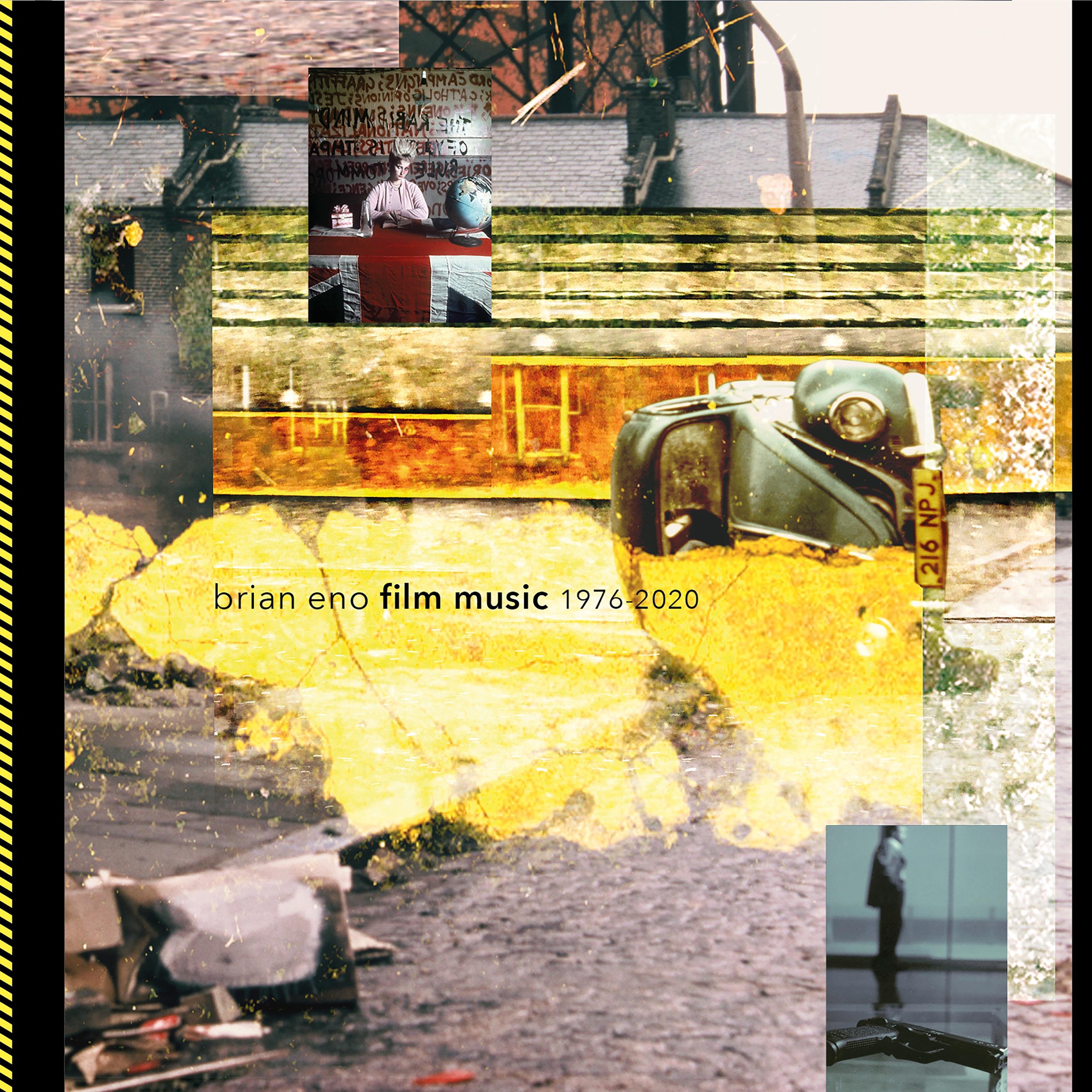
Brian Eno needs little introduction — the former Roxy Music synth player who coined the term ambient music and spent five decades shaping the sound of electronic music. What’s less often celebrated is his extraordinary body of film and television work, which Film Music 1976-2020 finally gathers together for the first time. Released on UMC / Opal Records, the seventeen-track compilation spans five decades of commissions — from Derek Jarman’s Sebastiane in 1976 to Netflix’s Top Boy — and seven of its pieces have never been released before.
The older material is a masterclass in atmosphere. Prophecy Theme, written for David Lynch’s 1984 Dune, remains one of Eno’s most evocative recordings: a slow, ceremonial synth melody draped in cavernous reverb that sounds as though it’s echoing around a cathedral-sized spaceship. Late Evening In Jersey, commissioned by Michael Mann for Heat, works similar magic with gently rippling piano, whilst You Don’t Miss Your Water — his hushed cover of the William Bell soul classic, heard in Jonathan Demme’s Married to the Mob — is as tender as anything in his catalogue.
Film Music 1976–2020 gathers five decades of Eno's film and television scores.
The record’s most famous moment is arguably Deep Blue Day, the country-tinged ambience that soundtracked Ewan McGregor’s infamous toilet dive in Danny Boyle’s Trainspotting. Taken alongside An Ending (Ascent) from the Apollo sessions — the piece Al Reinert’s moon-landing documentary For All Mankind made immortal — it demonstrates Eno’s knack for writing music that outlives the images it was created for.
The modern material proves that knack is undimmed. Top Boy (Theme) opens the record with a spare, nocturnal piano motif that captures the tension of the East London crime drama in just a few notes, and its companion piece The Sombre is darker still. Best of all is Ship In A Bottle, a previously unreleased 2009 collaboration with Jon Hopkins written for Peter Jackson’s The Lovely Bones: it shimmers with the restless, granular detail you’d expect from that pairing, delicate piano and soft pulses rising into something quietly ecstatic.
As a compilation, Film Music 1976-2020 could easily have been a dry archival exercise. Instead it hangs together as a coherent album in its own right — a testament to an approach to scoring that treats music as atmosphere, space and feeling rather than mere accompaniment. For newcomers it’s the perfect gateway into Eno’s vast catalogue; for devotees, it’s a welcome reminder that some of his best work was written for screens he may never have watched.