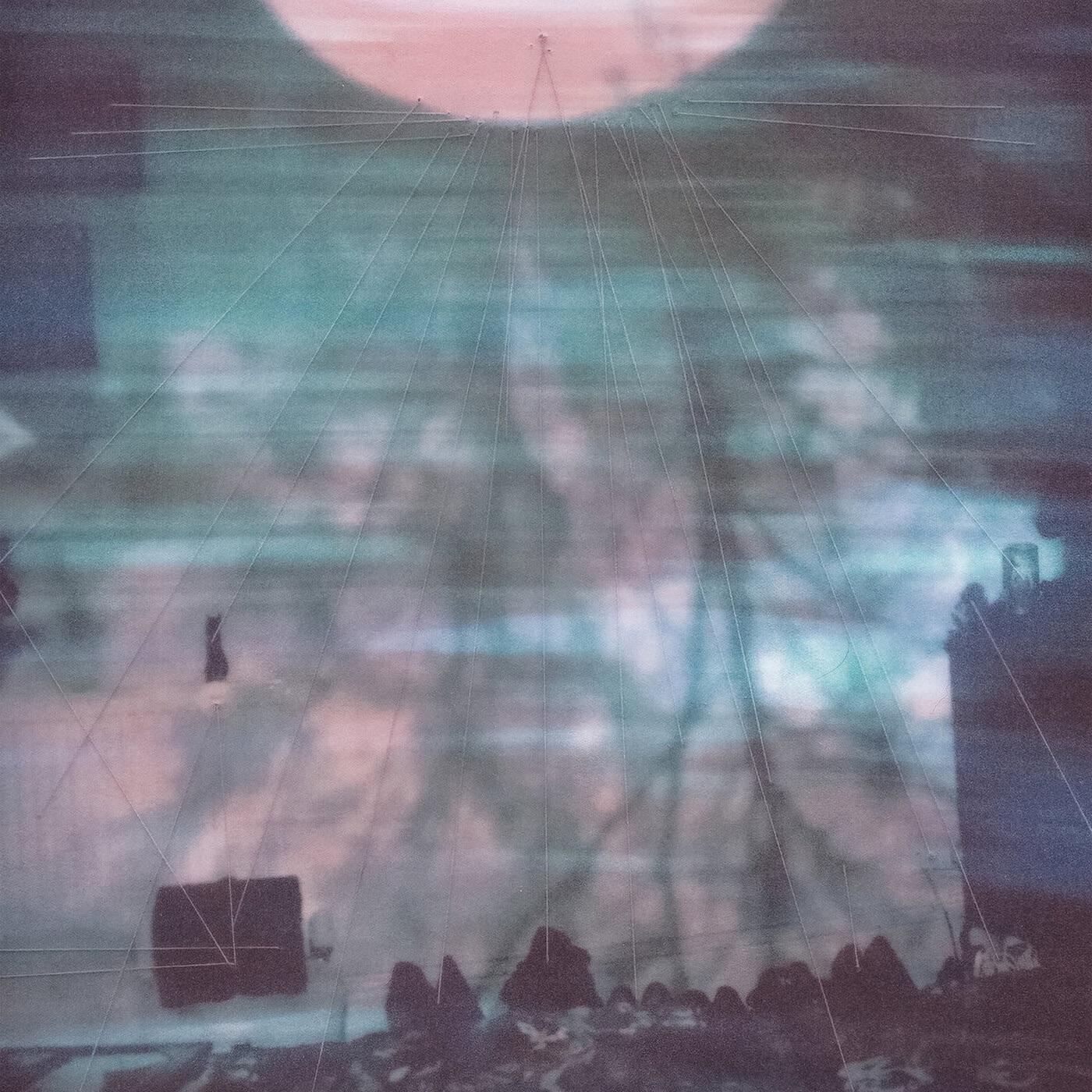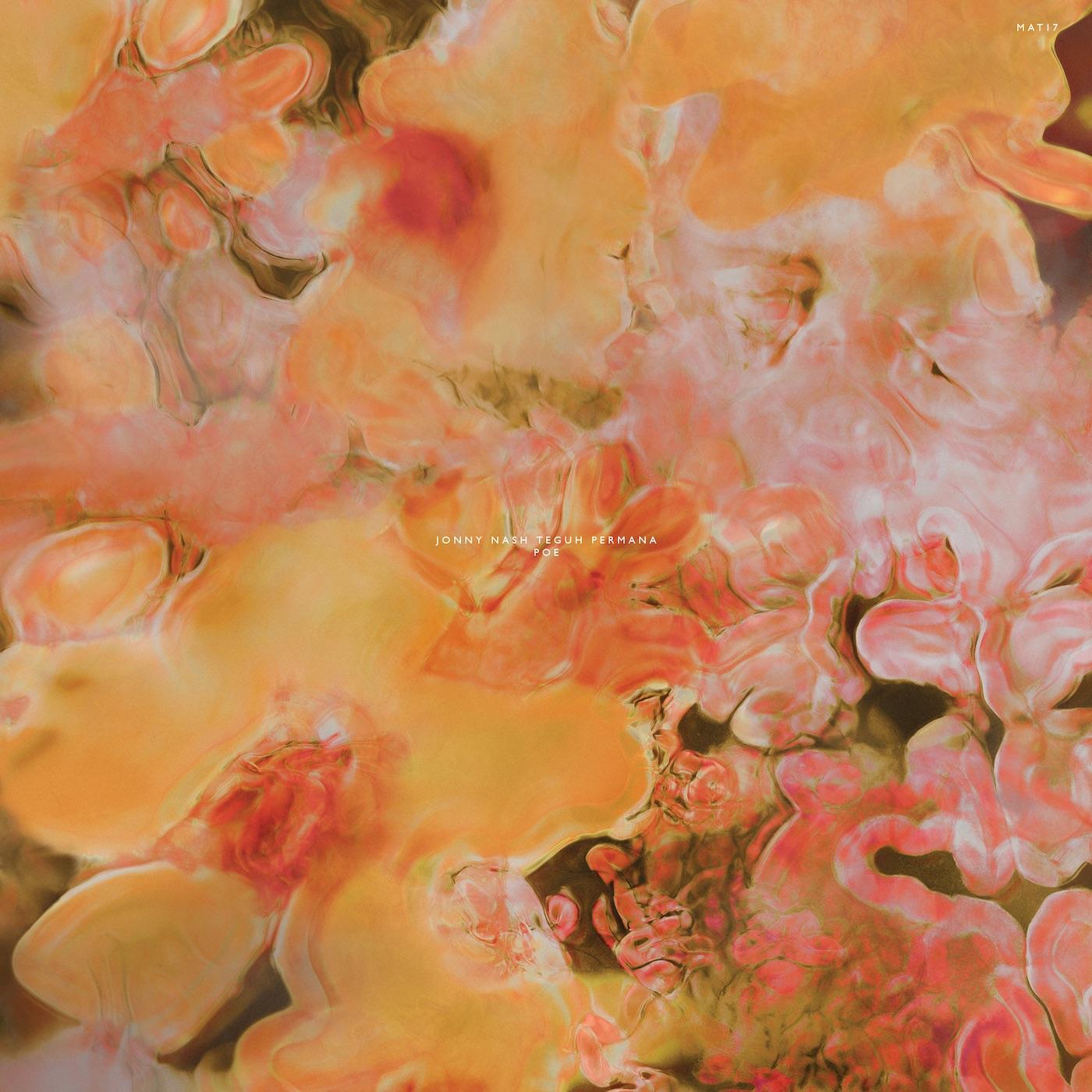
Jonny Nash has spent the past decade quietly building one of the most distinctive catalogues in ambient music—first as one half of Gaussian Curve, and more recently through his Amsterdam label Melody As Truth, a home for music that drifts between minimal synth meditations and field-recorded lullabies. For Poe, his collaboration with Teguh Permana, he ventures into far more ancient territory. Permana is a renowned player of the tarawangsa, the two-stringed bowed instrument central to the sacred music of Sundanese West Java, and the pair recorded together in March 2020, shuttling material between Bandung and Amsterdam before Nash shaped the final tape. Mixed by Jake Viator and mastered by Stephan Mathieu, the album’s title—Sundanese for “days”—belies its weight: Poe is a meditation on death and rebirth.
The opening track Langit (“sky”) sets the tone beautifully. The tarawangsa enters with long, unhurried bows, its creaking, woody tone sounding less like a string instrument than like an ancient door shifting in the wind, while Nash’s synths hover around it in warm, barely-there drones. It’s a sound that feels suspended, as if recorded at the exact moment between dusk and dark. Bunga (“flower”) unfolds even more slowly, the bowed notes left to ring and decay into generous reverb, the pair allowing each gesture its full breath rather than rushing toward resolution.
The record’s heart, though, is its centre. Api (“fire”) crackles with subtle movement, the tarawangsa’s tone growing more insistent against a bed of low, unhurried bass, while the epic Daun (“leaves”)—at 12:52 the longest piece here—finds Nash at his most patient, layering soft tape hiss, murmured electronics and plaintive bowing into something that drifts like smoke without ever losing its emotional pull. Angin (“wind”) follows with an airier, more open texture, before the digital bonus tracks Air (“water”) and Bumi (“earth”) complete an elemental cycle that feels both vast and intimate.
What makes Poe special is the respect at its core. Rather than treating Permana’s instrument as a sample to be draped in effects, Nash lets the tarawangsa lead, his electronics receding into the role of weather around it. The result is a record that feels genuinely cross-cultural rather than merely exoticised—a meeting of two patient musicians, one ancient tradition and one modern, finding common ground in stillness.
It’s not a record that demands attention so much as rewards it. Poe is unhurried, occasionally austere, and all the more moving for it—a beautiful, meditative document of death and rebirth, and one of the most quietly arresting ambient releases of the year.