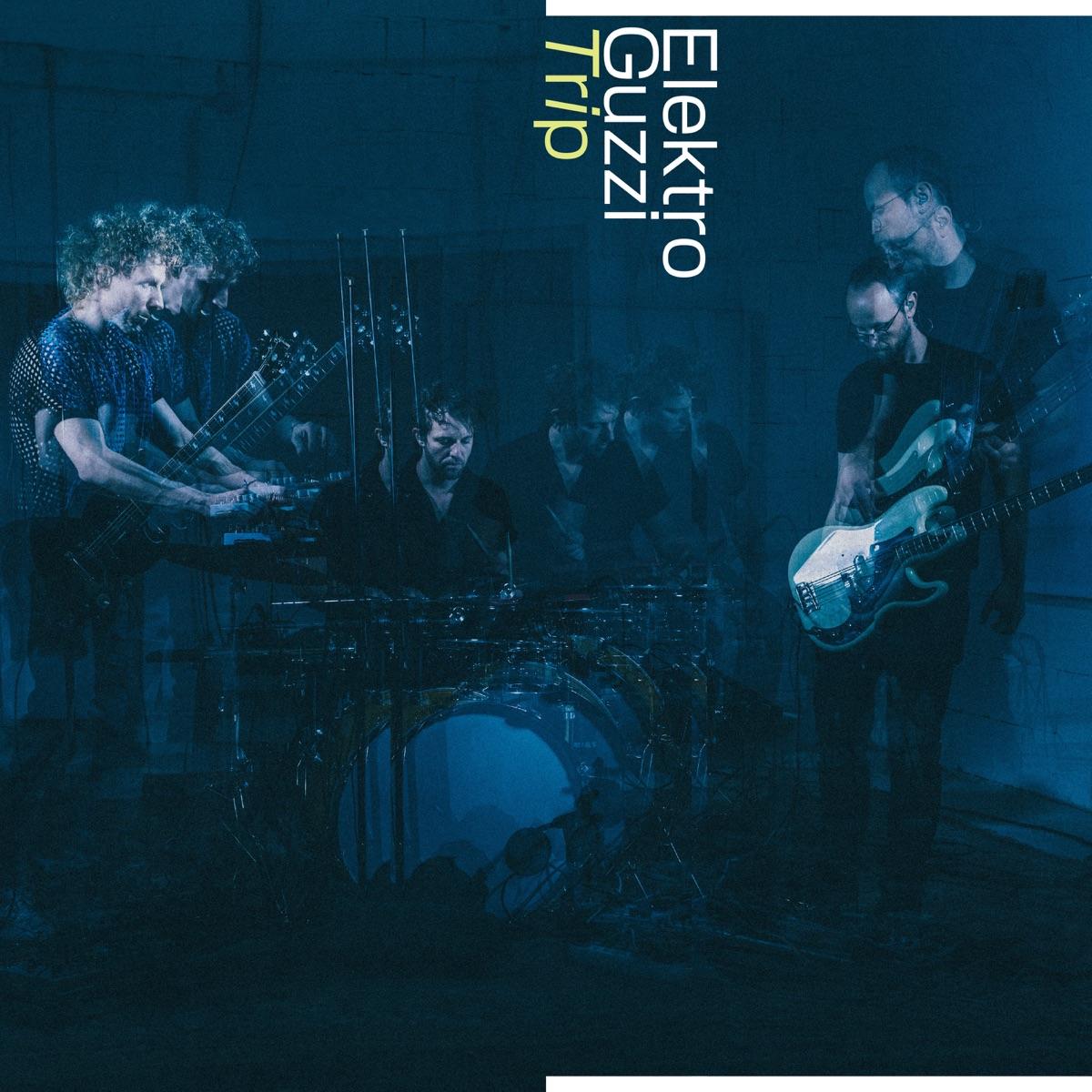
Vienna trio Elektro Guzzi have spent a decade refining one of electronic music’s most unlikely propositions: techno played by a band. Drummer, bassist and guitarist, channelled through a wall of effects pedals, they record in single takes—no computers, no sequencers, no loops; whatever looping emerges does so because three humans decide to stay in the pocket. TRIP, their first album in five years and the follow-up to 2016’s Triangle, lands on Vienna’s Palazzo Recordings with 64 minutes of live-cut minimal techno, dub and spiky electro, and has already drawn a nod from Bandcamp Daily’s Best Electronic on Bandcamp.
That long-form commitment is announced in the very first bars. Opener Rabazz runs nearly fifteen minutes and earns every second: a dry, rolling kick pattern hammered out on a real kit, a bass locked into a hypnotic one-note pulse, and a guitar that scrapes and shimmers around the edges like a signal struggling through a bad radio. Because nothing is quantised, the groove breathes in a way a sequencer never could—the feel shifts imperceptibly from bar to bar, and the quarter of an hour passes like four minutes.
The middle of the record is where the trio’s dub instincts take hold. Essig is tighter and more urgent, its clipped drums and probing bassline recalling Basic Channel’s skeletal funk, whilst Horst (Dub)—the title wears its reference on its sleeve—swamps everything in tape echo and cavernous reverb, the guitar dissolving into trails of delay before a booming sub bass reasserts order. There is real patience in these arrangements; nothing is rushed towards a peak.
The electro side is spikier. Rotor struts on a crisp, mechanical beat with a nasty staccato bassline, whilst the eleven-minute Eskalator builds a head of steam across its extended run, drums growing busier and more agitated until the release feels genuinely earned. Bogota slips back into dub territory at a near-identical length, and closer Exit pares everything back to a hypnotic pulse and a gently decaying guitar figure—a six-minute comedown that ends the record as quietly as it began.
TRIP is not a casual listen; at 64 minutes it demands the kind of patience its creators clearly possess. But that patience is rewarded. This is music made by hands rather than algorithms, and the small human imperfections—the slight drag of a snare, a bassline loosening its grip over time—are precisely what make it feel so alive. Three musicians, one room, no safety net: the result is the most convincing argument yet that techno belongs to bands too.
![The artwork for the album Before This by Ø [Phase]](/_next/image/?url=%2F_next%2Fstatic%2Fmedia%2Fartwork.3iatcz4yanrkb.jpg&w=3840&q=75)