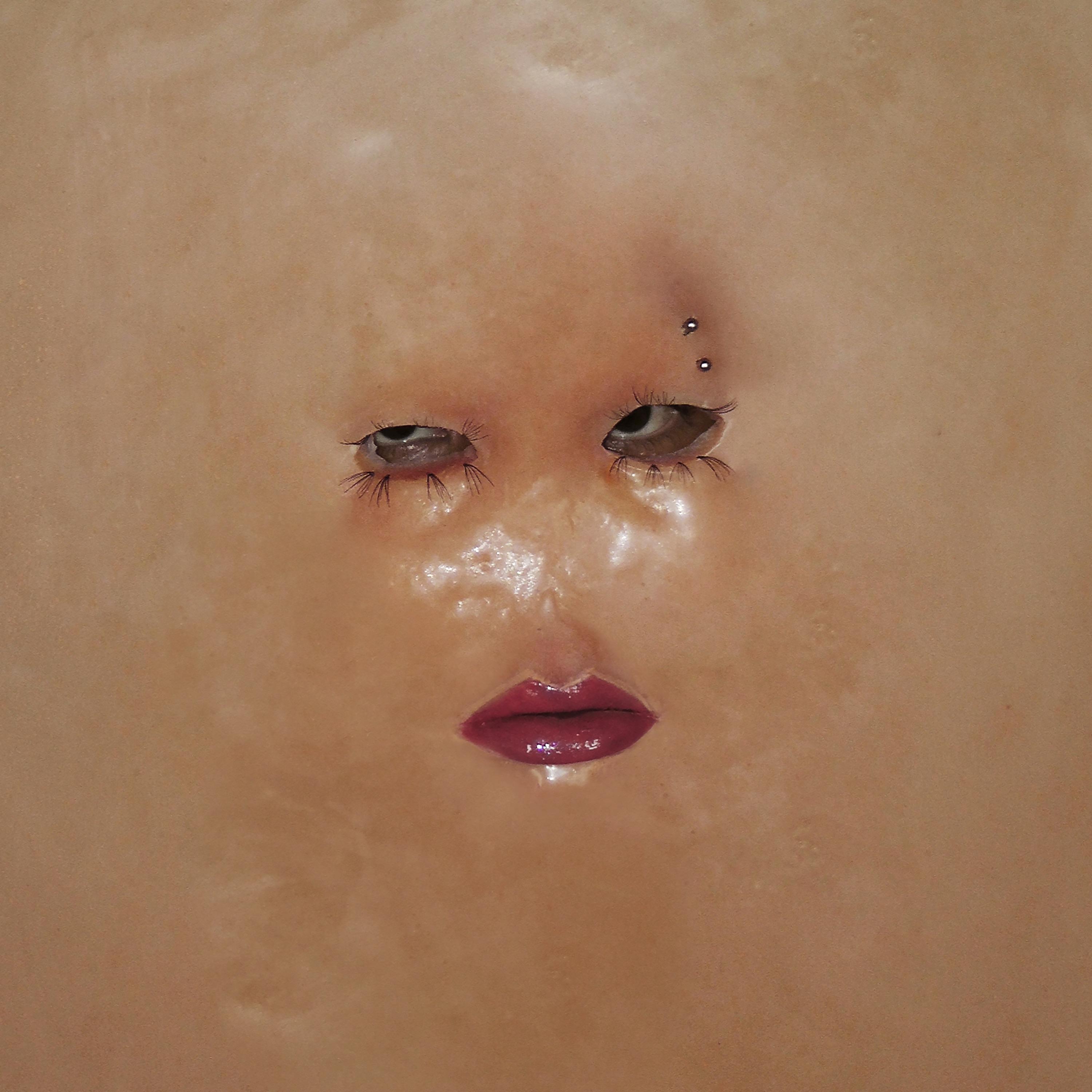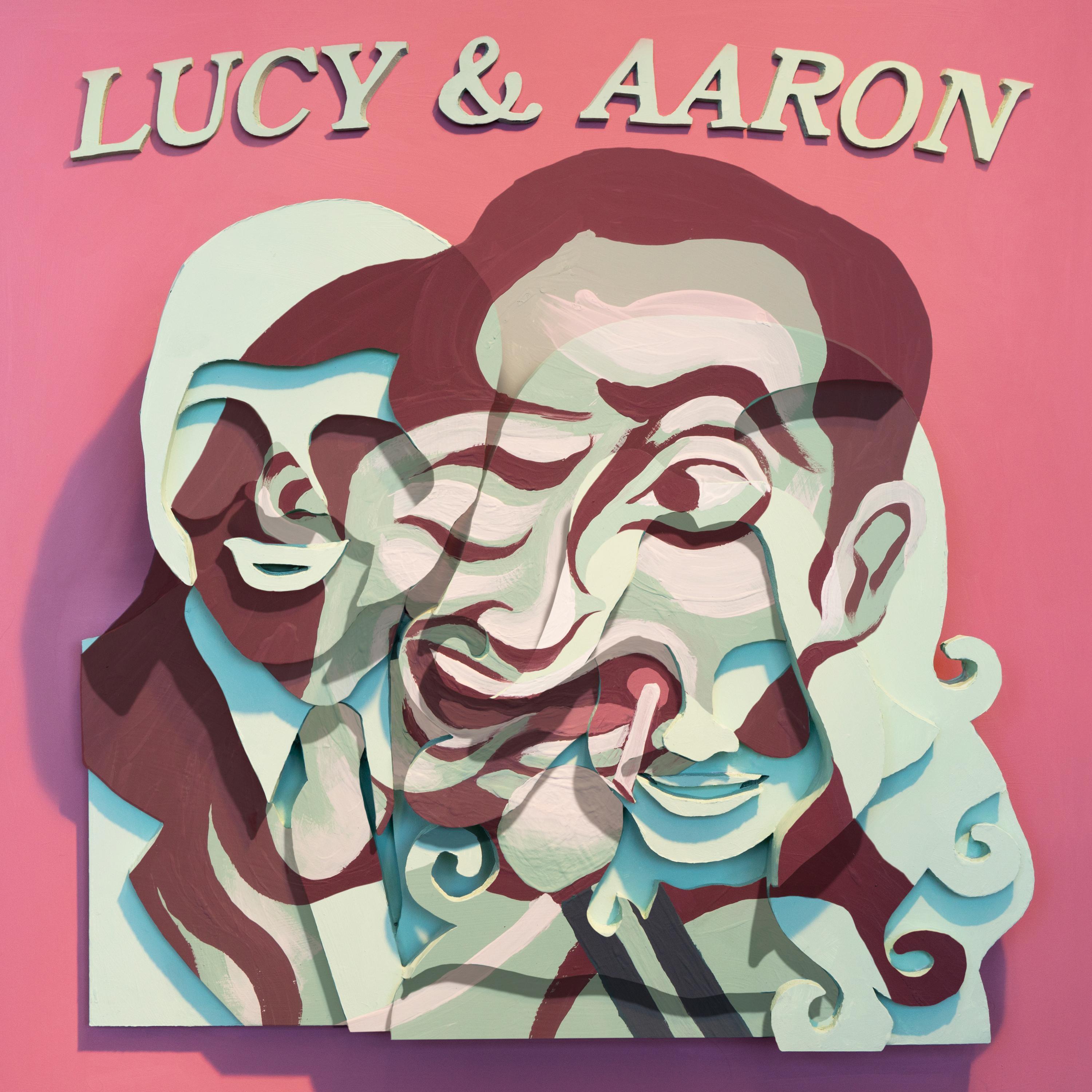
Aaron Dilloway has spent two decades dragging sound through the mud—as a co-founder of Michigan noise trio Wolf Eyes and, latterly, as the head of his own Hanson Records, the imprint on which Lucy & Aaron appears. Across from him stands Lucrecia Dalt, the Colombian singer and composer whose solo records drift between avant-pop, dub and near-sci-fi atmospherics, her voice dry ice where Dilloway’s world is scorched earth. Together they have made twelve short, uncanny tape-collage pop songs—the year’s most distinctive experimental crossover, and already shaping up to be one of its most talked-about records.
The tape machine is the album’s centre of gravity. Nearly every track carries its fingerprints: layers of hiss, splice edits that land mid-syllable, loops slowed until they curdle, and half-erased recordings bleeding through the arrangements like old photographs. Dalt’s voice cuts through the murk with startling clarity—precise, elegant, unflappable—so each song plays like a broadcast from two planets that happen to share a frequency. It should be a mess; instead it’s the most beguiling thing either of them has made in some time.
The brevity is the point. Nine of the twelve tracks are finished inside four minutes—transmissions more than compositions, a beat settling, a melody surfacing, the tape running out before anything overstays its welcome. There are no six-minute build-ups, no patience games; Voyria is in and out in ninety-four seconds and leaves a deeper mark than records ten times its length. Forced to say everything in a single gesture, the pair thrive.
The highlights lean hardest into pop. Demands of Ordinary Devotion floats Dalt’s most melodic refrain over soft, slightly detuned keys; Yodeling Slits does exactly what its name promises, with glorious, unironic yodeling; and The Blob hands the microphone to Dilloway, who croaks through the Burt Bacharach-penned theme from the 1958 film like a foghorn in love. The Spanish-language pair Bordeándola and Trueno (“thunder”) are the record’s most songlike, whilst Niles Baroque conjures strings like an orchestra warming up in the next room. Whatever they’re up to, it’s never boring.
Lucy & Aaron doesn’t always cohere—some tracks remain sketches, and Dilloway’s tape damage occasionally swallows a melody whole—but that friction is exactly why the record rewards repeat visits. It’s messy, elliptical and sometimes perverse, yet it’s also generous and tender, with a vocal interplay that gets richer each time the hiss parts. Twelve short songs that refuse to behave, unlike anything else released this year—and one of the year’s most singular albums. Long may the pair continue to share a frequency.



























![The artwork for the album Before This by Ø [Phase]](/_next/image/?url=%2F_next%2Fstatic%2Fmedia%2Fartwork.3iatcz4yanrkb.jpg&w=3840&q=75)