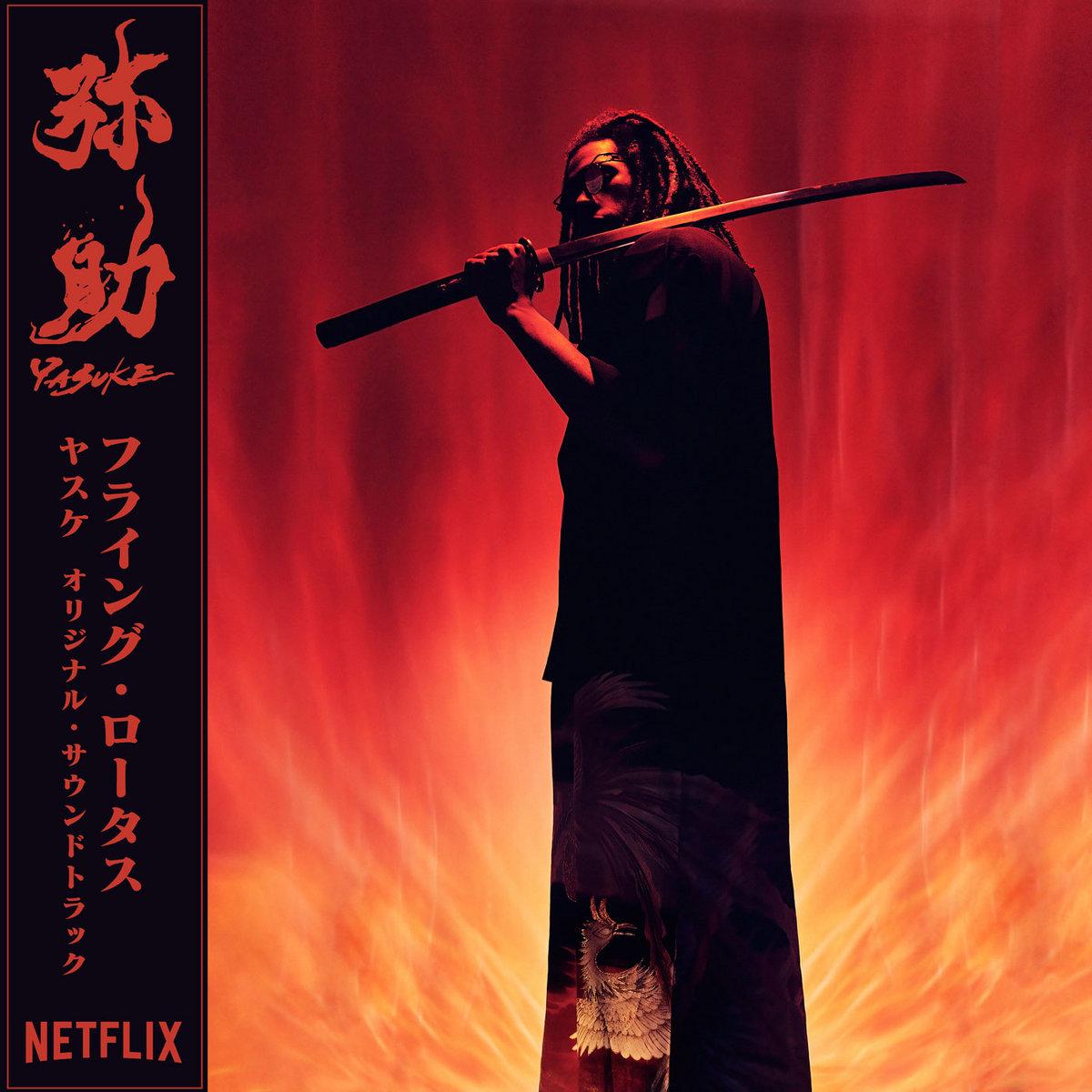
Flying Lotus releases Yasuke this week on Warp Records — his score for the Netflix anime of the same name, and his first full-length work for the screen since directing 2017’s Kuso. Loosely based on the real-life African samurai who served under Oda Nobunaga, the show reimagines Yasuke’s story in a fantasy Japan of sorcery and mechs, and FlyLo’s 26-track score matches it scene for scene: a restless, borderless electronic travelogue that moves between kabuki drama, Vangelis-style synth grandeur and the gnarled, organic beats that have made him one of the most singular producers of his generation.
Nothing sits still for long. War at the Door opens in ceremonial mode, taiko drums and cavernous reverb parting for a slow, stately melody, while Taiko Time // Sacrifice leans hard into the percussive spectacle the action sequences demand. The Vangelis influence is unmistakable in the vast, glowing pads of Enchanted and Mind Flight, which could pass for outtakes from a lost eighties sci-fi epic, but it’s the way these grand gestures rub against scratchy, imperfect drums and low-slung bass that keeps the record unmistakably FlyLo.
The guest list is a family affair. Thundercat’s elastic bass glides through Black Gold, the closest thing here to a straight-up FlyLo jam; Denzel Curry spits coiled, controlled fire over the skeletal percussion of African Samurai; and Niki Randa’s voice — already a fixture of his world — floats through both the dusky Hiding in the Shadows and the spectral closer Between Memories, her harmonies drenched in enough reverb to fill a shrine.

Yasuke is Flying Lotus's score for the Netflix anime of the same name.
At 44 minutes across 26 tracks, Yasuke is deliberately episodic — most cues barely clear the two-minute mark, and a few, like the 40-second Where’s the Girl?, are little more than ideas that arrive, make their point and vanish. It functions less like a conventional album than like the score it is: a series of vivid snapshots that reward attention without ever outstaying their welcome. Played end to end it becomes something more — a continuous, dreamlike journey through a world at war.
That brevity is the record’s only real frustration — cues cut away just as you want to linger. But as a score, and as the clearest statement yet of FlyLo’s screen ambitions, Yasuke is a triumph: rich in texture, generous in mood, and proof that his vision translates beautifully to someone else’s world.





































![The artwork for the album Before This by Ø [Phase]](/_next/image/?url=%2F_next%2Fstatic%2Fmedia%2Fartwork.3iatcz4yanrkb.jpg&w=3840&q=75)