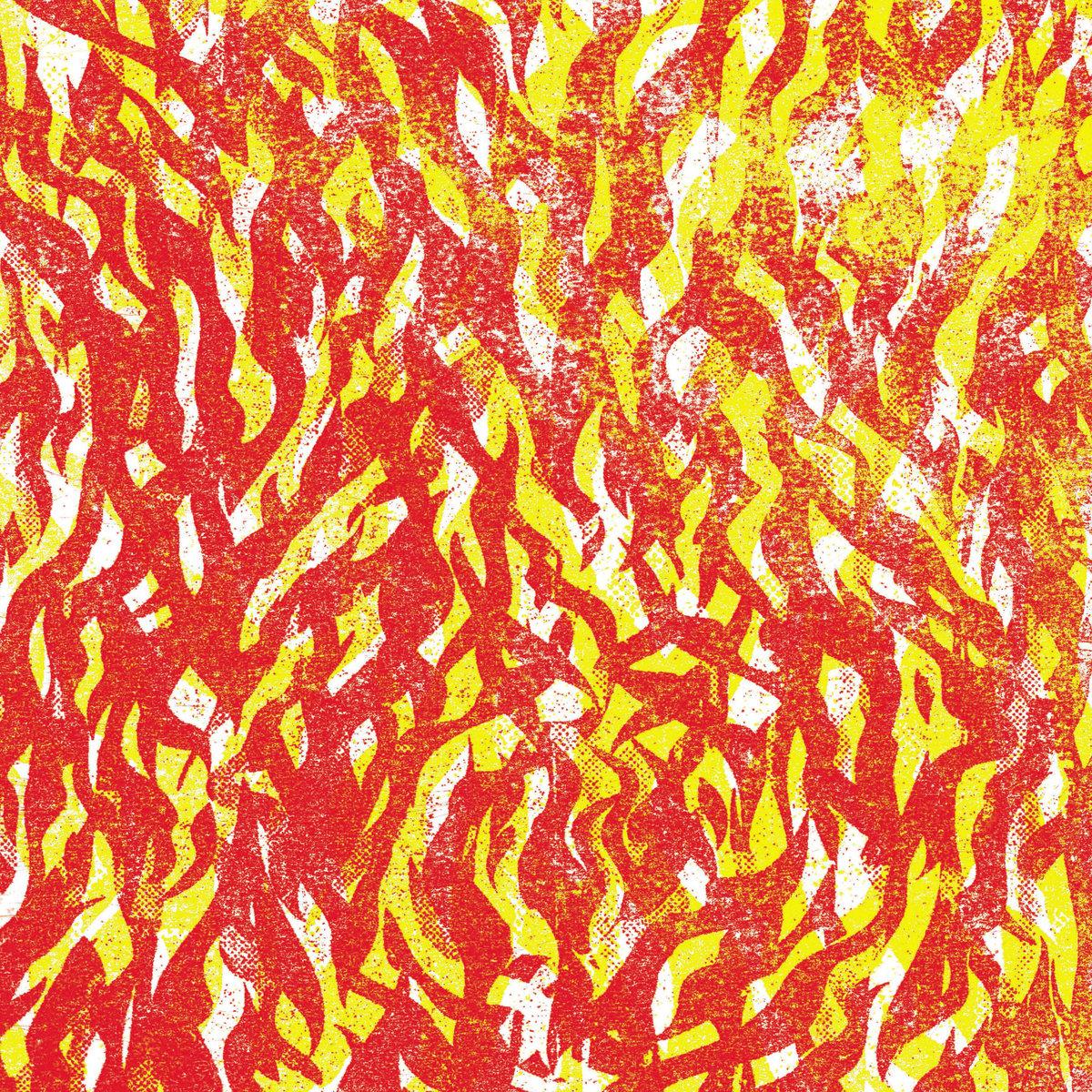
Some labels develop a house sound; Powell’s Diagonal has spent a decade developing a house temperament—restless, brittle, allergic to the obvious. Presentism fits that temperament perfectly: the first full-length collaboration between Cam Deas and Vienna’s Jung An Tagen, released today as DIAG059, is a record of what the pair call system music, eight tracks of corkscrewing avant garage-techno that sits somewhere between Mark Fell’s algorithmic pieces and Errorsmith’s hyper-precise constructions.
The idea behind it is disarmingly simple. Every track shares the title That, each version distinguished only by its grid (Ngrid or Ygrid) and its pitch class. Nothing else moves: the same brittle drum programming, the same four-to-the-floor kick locked to a pulse that keeps sliding out of true, the same refusal of melody, harmony or any of the usual handholds. On the surface it all feels mechanical, yet the grooves corkscrew, sputter and double back on themselves like living things testing the limits of their enclosure.
Opener That (Ngrid/c) sets the tone: a dry, insistent kick, percussion shaved into tiny flinty chips, and a bassline that snakes sideways rather than settling into the pocket. That (Ygrid/a) is more convulsive, its rhythm bucking against the grid as a thin, metallic resonance rings above the drumwork, whilst That (Ygrid/c#) pushes things further into abstraction, every element slightly out of phase with the last. There’s a perverse patience to the sequencing too—the album builds its momentum across the mid-section, letting That (Ygrid/d#) and That (Ygrid/d) flex their skewed grooves before anything like a peak arrives.
That peak, of sorts, is closing track That (Ygrid/d#) - Second Woman Remix, the only moment a second pair of hands touches the material. It’s a revealing one: Glasgow duo Second Woman, whose own work shares this love of systemic, obstructive rhythm, drag the source into darker, more physical territory, the grid’s wobble given flesh and muscle. Their remix doesn’t resolve the record so much as prove how much rhythmic life these dry bones contain.
Presentism is a demanding listen—there are no hooks to grab, and its pleasures arrive sideways, in the friction between the machine and its own malfunction. But that friction is the point. As a statement of intent from two of Europe’s most stubbornly individual producers, it’s a rare thing: an experimental record with real physical weight, one that works as well through headphones as it does rattling a club’s walls.














![The artwork for the album Before This by Ø [Phase]](/_next/image/?url=%2F_next%2Fstatic%2Fmedia%2Fartwork.3iatcz4yanrkb.jpg&w=3840&q=75)